


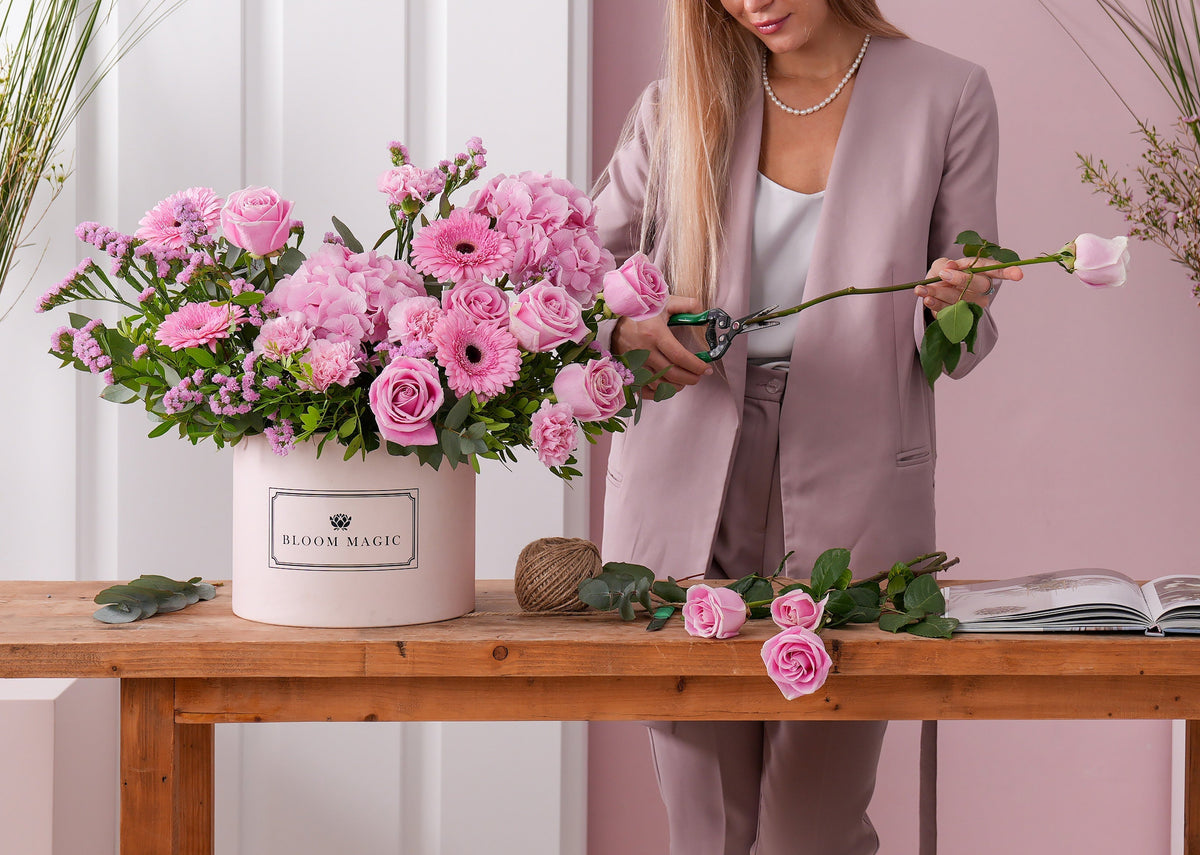
Flowers have an innate ability to evoke emotions, convey messages, and brighten up any space with their vibrant hues. When it comes to creating breathtaking floral arrangements, understanding the art of colour combinations is essential. The right blend of colours can transform a simple bouquet into a work of art that resonates with the occasion and the recipient. In this guide, we will explore the world of floral colour combinations and how to harness their power to create stunning arrangements.
Understanding Colour Theory for Floral Arrangements
Before delving into creating colourful masterpieces, it's crucial to grasp the basics of colour theory. The colour wheel is your best friend in this endeavour. It consists of primary colours (red, blue and yellow), secondary colours (green, orange and purple), and tertiary colours, which are a combination of the two.
Understanding the colour wheel helps you identify harmonious combinations. Colours that sit opposite each other on the wheel are complementary and create the strongest contrast. Colours that sit next to each other are analogous, and they blend into softer, more harmonious arrangements.

Popular Colour Combinations and Their Meanings
Every colour carries a unique meaning and symbolism. Incorporating these meanings into your floral arrangements can add depth and significance to your gift. Here are some popular colour combinations and their associated meanings:
- Red and white: a classic combination symbolising love and purity, perfect for weddings and romantic occasions.
- Yellow and purple: a vibrant pairing signifying joy and royalty, suitable for celebrations and milestones.
- Pink and blue: a delicate fusion denoting sweetness and tranquillity, often chosen for new arrivals and christenings.
- Orange and green: a lively duo representing energy and growth, ideal for birthdays and festive gatherings.
Creating Harmony with Monochromatic Arrangements
Monochromatic arrangements focus on a single colour but vary the shades and tones within that spectrum. This approach exudes elegance and simplicity. An all-white arrangement can evoke purity and grace, while various shades of blue create a calming and serene atmosphere. The same holds for pink flowers, where pale blush through to deep fuchsia all sits within one family. Working within one colour family is also the easiest way to make a small arrangement look considered rather than sparse.

Complementary and Analogous Pairings
Complementary colours sit opposite one another on the wheel. Red and green, purple and yellow, and blue and orange are all complementary pairs, and each brings out the intensity of the other. These combinations make a statement and add a burst of energy to any setting, which is why they suit celebrations and anywhere the arrangement needs to be seen from across a room.
Analogous colours sit side by side on the wheel instead. Pink with peach and coral, or blue with violet and teal, produce a gentler effect with no single colour competing for attention. Each pink shade carries its own meaning, which our guide to what pink flowers mean sets out in detail. If a complementary pairing feels too bold for the room, an analogous one is usually the answer.
Creating Mood with Warm and Cool Colours
Colours also influence the mood of an arrangement. Warm colours such as reds, oranges and yellows exude energy and excitement, making them perfect for lively gatherings and celebrations. Cool colours such as blues, greens and purples evoke calmness and relaxation, making them ideal for more tranquil occasions. Seasonal palettes tend to follow the same logic, and our guide to decorating your home with autumn flowers shows how a warm palette works through the darker months.

Personalising Colour Choices for Occasions
To create truly meaningful floral arrangements, consider the occasion and the recipient's preferences. For a friend's birthday, choose colours that reflect their personality. For a sympathy bouquet, opt for soothing and muted tones. By tailoring your colour choices, you can convey heartfelt sentiments and make your floral gift even more special.
Tips for Assembling and Presenting Colourful Masterpieces
Creating stunning floral arrangements goes beyond colour selection. Here are some additional tips for assembling and presenting your colourful masterpieces:
- Texture variety: incorporate different flower shapes and textures to add depth and interest to your arrangement.
- Vase selection: the right vase can complement your colour scheme and enhance the overall aesthetic. Clear glass suits a modern look, while a vintage container gives a classic feel. Our flowers in a vase arrive ready to display.
- Balance and proportion: distribute colours evenly and pay attention to the height and size of each flower to achieve balance in your arrangement.
- Maintenance: keep your flowers looking fresh by changing the water every few days and trimming the stems at an angle.
- Personal touch: add a personal note or a unique ribbon to your arrangement to make it truly special.
Whatever palette you settle on, the colours you choose are what make an arrangement feel like it was picked for one person rather than pulled off a shelf. Browse our complete range to find a colour combination that suits the occasion, with hand-arranged bouquets delivered across Ireland.


