


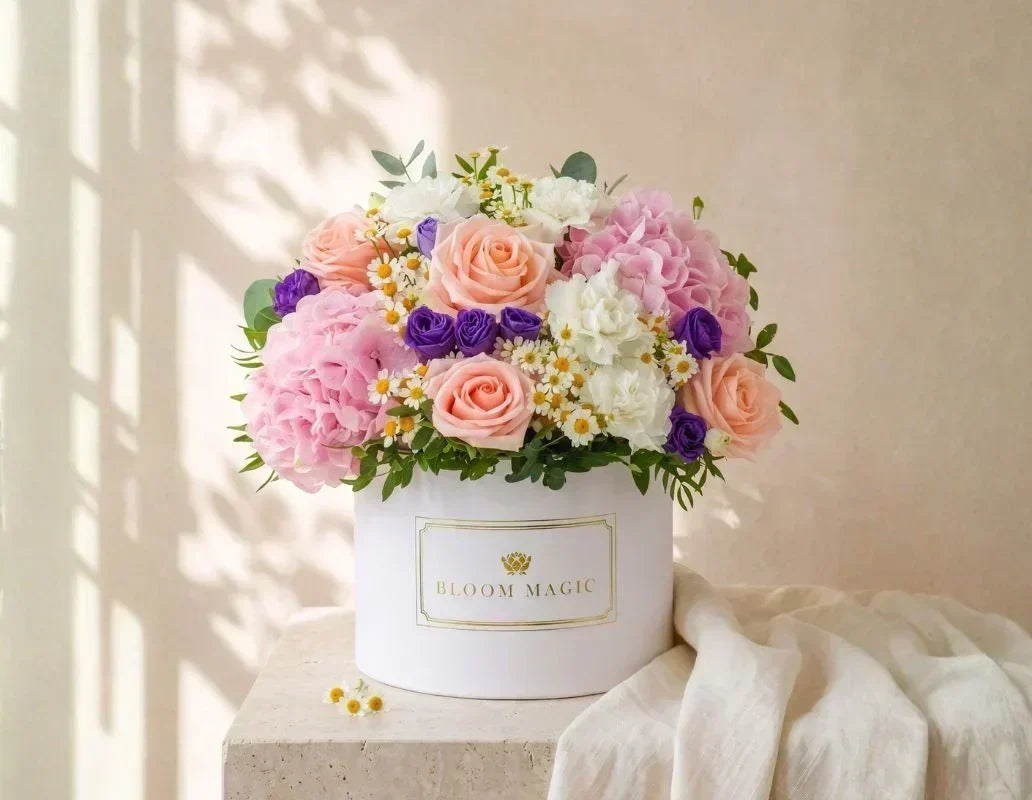

Hydrangeas are one of those flowers that people tend to remember. Their large, rounded blooms and rich colour range make them instantly recognisable, and they carry a weight and presence that few other flowers can match in an arrangement.
Whether you have received them in a bouquet, spotted them in a garden, or are simply curious about what makes them so popular, this guide covers everything worth knowing about hydrangea flowers — from their botanical background and symbolism to how they perform as cut flowers. Explore our hydrangea collection to see them in their full glory.
What Are Hydrangea Flowers?
Hydrangeas belong to the Hydrangeaceae family, a group of flowering plants that includes around 75 recognised species. Most of the hydrangeas used in floristry come from the species Hydrangea macrophylla, commonly known as the bigleaf hydrangea, which is native to Japan and eastern Asia.
The most distinctive feature of a hydrangea is its flower head. What appears to be a single large bloom is actually a cluster of many small flowers surrounded by colourful sepals — the petal-like structures that most people mistake for the flowers themselves. These sepals are grouped tightly together into a large, rounded cluster known as a thyrse, which is what gives hydrangeas their full, almost cloud-like appearance.
Hydrangeas come in a wide range of colours, including blue, pink, purple, white, and green. One of their more unusual traits is that certain varieties change colour depending on aluminium availability in the soil. In acidic soil, aluminium is more easily absorbed by the plant, producing blue sepals. In alkaline soil, aluminium is locked out, and the sepals turn pink. This natural variability means that no two hydrangea plants are ever quite the same.
The leaves are broad, dark green, and slightly serrated along the edges. The stems are semi-woody and relatively soft compared to truly woody-stemmed flowers like lilac or forsythia. This softer stem structure means hydrangeas absorb water readily but also lose moisture faster, which is why they require more hydration than most cut flowers.

Why Hydrangeas Are Popular in Bouquets
Hydrangeas have become one of the most sought-after flowers in modern floristry, and the reasons go beyond simple aesthetics.
Volume is part of it. A single hydrangea stem fills more visual space than almost any other cut flower. This means that even a small arrangement with just a few stems can look full and generous, which makes them a practical choice for bouquets, centrepieces, and hatbox arrangements alike.
Colour versatility is another factor. The range of shades available — from deep blues and purples through to soft pinks, whites, and greens — means hydrangeas can be styled to suit almost any aesthetic. They work equally well in romantic, pastel-toned arrangements as they do in bold, contemporary designs.
Texture matters too. The clustered structure of a hydrangea head adds a layered, textured quality to an arrangement that smoother flowers like roses or tulips cannot replicate on their own. Florists often use hydrangeas as a base or anchor flower, building the rest of the arrangement around their volume and texture.
They also pair well with a wide variety of other blooms. Hydrangeas complement roses, peonies, lilies, and eucalyptus without competing for attention, which is why they appear so frequently in mixed bouquets. For anyone looking for visually impressive fresh flowers with a respectable vase life, hydrangeas are a dependable choice.
What Do Hydrangeas Symbolise?
Like most flowers with a long cultural history, hydrangeas carry several layers of meaning depending on the context and the colour.
In their most positive interpretation, hydrangeas symbolise gratitude, grace, and abundance. The fullness of the flower head is often associated with heartfelt emotion and generosity, which is why they are a popular choice for thank-you gifts and milestone celebrations.
The specific colour adds nuance. Blue hydrangeas are traditionally linked to sincerity and deep understanding. Pink hydrangeas lean toward romance and affection. White hydrangeas are associated with purity and new beginnings, making them a frequent choice for weddings and christenings. Purple hydrangeas suggest richness and a desire for deeper connection.
In Japanese culture, where hydrangeas originate, they are sometimes associated with apology and honest emotion — a gift that says more than words alone. For a broader look at what different summer blooms represent, our guide to the language of summer blooms and their symbolism covers the meanings behind some of the most popular seasonal flowers.
It is worth noting that in some Victorian-era flower dictionaries, hydrangeas were interpreted less favourably — occasionally linked to vanity or boastfulness, likely because of their showy appearance. In modern floristry and gifting, however, the positive associations far outweigh the historical ones.

When Are Hydrangeas in Season?
Hydrangeas are most commonly in bloom from late spring through early autumn, with peak availability during summer. In Ireland, hydrangeas typically flower between June and September, which is why they are especially popular in seasonal bouquets and summer floral arrangements.
This seasonal window means that hydrangeas are at their freshest and most abundant during the months when demand for bouquets and gifting is also at its highest. If you are planning to include hydrangeas in an arrangement, summer is the ideal time to do so — the selection is wider, the blooms are larger, and the colours are more vivid than at any other point in the year.
How Long Hydrangeas Last as Cut Flowers
Hydrangeas are beautiful, but they are also among the more demanding cut flowers when it comes to water. Their large flower heads lose moisture quickly, which means vase life depends heavily on how well they are hydrated from the moment they are cut.
Under good conditions — clean water, a cool room, and stems trimmed at an angle — hydrangeas typically last between five and ten days as cut flowers. That places them in the mid-range compared to other popular varieties. They will not match the two-to-three-week endurance of carnations, but with proper care, they hold up well alongside roses and lisianthus, which share a similar lifespan.
The most common issue people encounter with hydrangeas is premature wilting, which almost always comes down to water intake. The thick, woody stems can struggle to absorb enough water if they are not cut cleanly, and the large flower heads lose moisture faster than most other blooms. Keeping the vase topped up and the stems freshly trimmed makes a noticeable difference.
If your hydrangeas arrive as part of a hand-tied bouquet, following proper bouquet care steps will help them reach their full vase life. Our guide on caring for your Bloom Magic hand-tied bouquet covers the essentials.
While hydrangeas are not the longest lasting fresh flowers available, they can maintain their beauty for up to ten days with proper care and hydration. Their thick stems and large blooms benefit from frequent water changes, freshly trimmed stems, and cool room temperatures. When conditioned correctly, hydrangeas perform well as cut flowers that last a long time while also delivering the volume and visual impact that make them so popular in bouquets.
Are Hydrangeas Long Lasting?
Compared to some of the longest lasting fresh flowers available — carnations, chrysanthemums, and alstroemeria, which can survive two to three weeks in a vase — hydrangeas sit in the middle of the range. They are not the most enduring cut flowers, but they are far from the most fragile either.
What sets hydrangeas apart is the impact they deliver during the days they are at their best. A vase of hydrangeas in full bloom commands attention in a way that longer lasting but less visually dramatic flowers simply cannot. For anyone weighing longevity against presence, hydrangeas offer a compelling balance — they are cut flowers that last a long time in terms of visual return, even if other varieties technically outlast them by a few days.

Hydrangeas in Floral Design
From a design perspective, hydrangeas offer something that most individual stem flowers cannot: instant volume. A single stem can anchor an entire arrangement, which is why florists frequently use them as the foundation of a bouquet rather than as a supporting element.
In hatbox and presentation arrangements, hydrangeas work particularly well. Their rounded shape complements the circular form of a hatbox, creating a cohesive, almost sculpted look. The Parisian hatbox collection features arrangements where hydrangeas play exactly this role — anchoring the design with volume and colour while other blooms add detail and contrast.
In hand-tied bouquets, hydrangeas serve a slightly different purpose. They provide a lush backdrop that makes surrounding flowers — roses, peonies, or seasonal fillers — stand out more vividly. The contrast between the clustered texture of a hydrangea and the smooth petals of a rose is one of the most reliable combinations in modern floristry.
Colour is central to how hydrangeas are used in design. Blue and purple hydrangeas create depth and drama, while white and green varieties lend a softer, more contemporary feel. For inspiration on pairing hydrangea colours with complementary blooms, our guide to floral colour combinations is a good starting point.
Hydrangeas also scale well. They work in everything from compact arrangements with just two or three stems to large, extravagant displays for events and celebrations. That flexibility, combined with their visual weight, is what keeps them at the centre of floral design across seasons.

The Lasting Beauty of Hydrangeas
Hydrangeas are one of the most visually striking flowers available in modern floristry. Their large, clustered blooms offer volume and texture that few other flowers can match, and their wide colour range makes them adaptable to almost any arrangement style.
They carry positive symbolism — gratitude, grace, and abundance — which makes them a meaningful choice for gifting. As cut flowers, they require attentive hydration but reward that care with five to ten days of impressive bloom.
Whether styled in a hatbox, a hand-tied bouquet, or a simple vase arrangement, hydrangeas bring a sense of luxury and fullness that elevates any setting. Browse our summer blooms collection to see how they fit into this season’s arrangements.


